The Birth of the First Atomic Submarine: How the USS Nautilus Changed Naval Warfare
Introduction
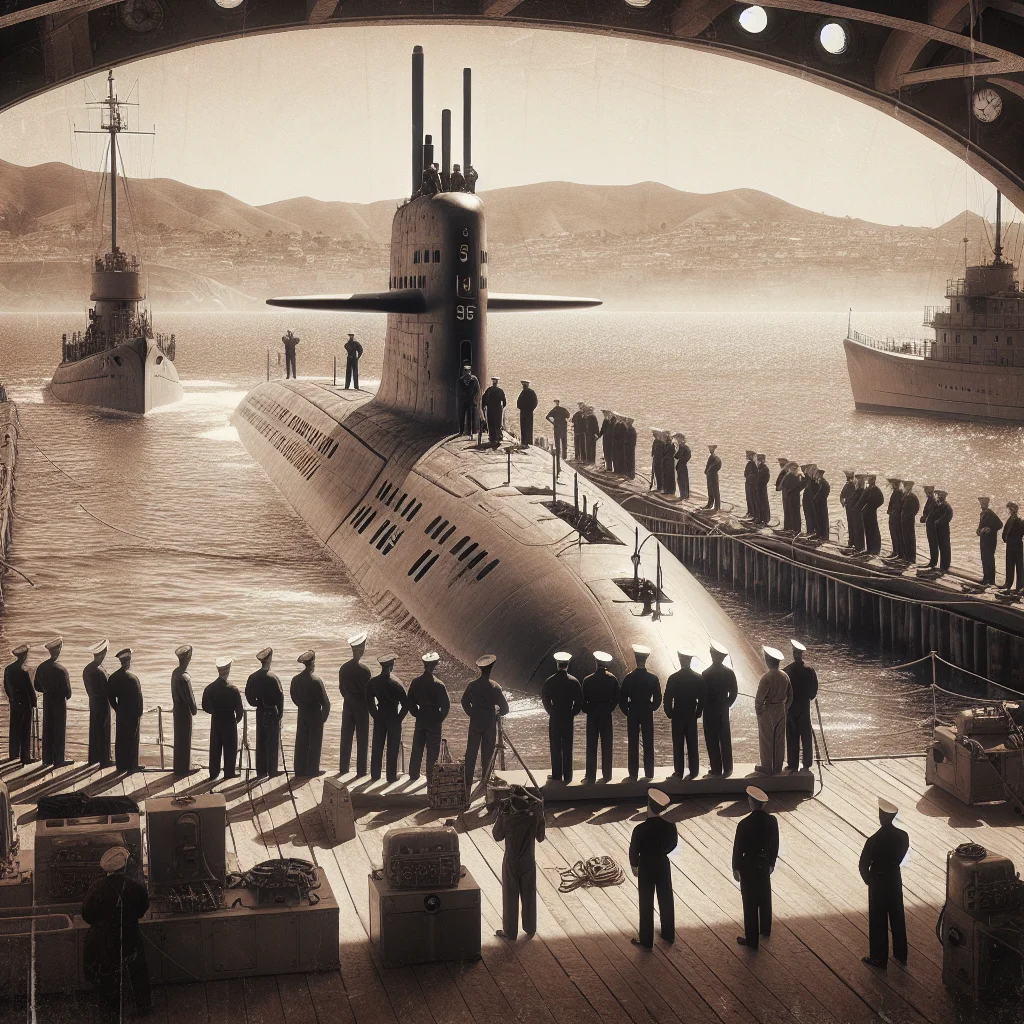
On January 20, 1955, the USS Nautilus, the world's first operational nuclear-powered submarine, was launched. This groundbreaking event marked a pivotal moment in naval technology and warfare, forever changing the strategic dynamics of military operations at sea. The advent of nuclear propulsion in submarines not only enhanced their capabilities but also set the stage for a new era in maritime security, with implications that resonate in today's geopolitical climate.
Historical Background
During the early 1950s, the Cold War between the United States and the Soviet Union was intensifying. Both superpowers were in a technological race to gain military supremacy, particularly in the realms of nuclear weaponry and naval capabilities. The U.S. Navy recognized the strategic potential of a submarine that could remain submerged for extended periods without resurfacing for fuel. Admiral Hyman G. Rickover, often called the 'Father of the Nuclear Navy,' played a crucial role in advocating for and developing nuclear propulsion technology.
Rickover's vision was supported by the scientific advancements of the time, particularly in nuclear physics, which made the idea of a nuclear-powered vessel feasible. The United States Congress approved the project, and construction of the USS Nautilus began in 1952 at the Electric Boat Division of General Dynamics in Groton, Connecticut.
The Event Itself
On a cold January day in 1955, the USS Nautilus was launched into the Thames River in Connecticut. The event attracted significant attention, symbolizing American innovation and technological prowess. The launching ceremony was attended by dignitaries, military officials, and the press, all aware of the significance of this new addition to the naval fleet.
The Nautilus was not merely a technological marvel; it was a strategic asset capable of transforming naval warfare. The submarine could travel at high speeds underwater and remain submerged for weeks, a stark contrast to diesel-electric submarines that required frequent surfacing. This capability provided the U.S. Navy with unprecedented stealth and operational flexibility.
Immediate Consequences
Following its launch, the USS Nautilus underwent a series of sea trials to test its capabilities. The results were impressive, proving the viability and advantages of nuclear propulsion. The submarine's ability to travel submerged for extended periods and its enhanced speed demonstrated a clear advantage over existing technologies.
The successful launch and operation of the Nautilus also sent a message to the world about the United States' commitment to maintaining superior military technology. It intensified the naval arms race, prompting the Soviet Union to accelerate its own nuclear submarine program.
Long-Term Impact
The introduction of the USS Nautilus set a new standard for submarine design and operation. Over the following decades, nuclear-powered submarines became a cornerstone of naval strategy for many countries. They provided strategic deterrence, particularly when equipped with ballistic missiles, and became critical components of national defense systems.
The Nautilus' success paved the way for the development of more advanced submarines and spurred innovations in nuclear technology. It highlighted the potential of nuclear power beyond its initial applications in weapons and energy, influencing policy and research in various sectors.
Legacy and Modern Relevance
Today, the legacy of the USS Nautilus is evident in the continued use and development of nuclear-powered submarines by navies around the world. These vessels remain integral to modern military strategy, particularly in terms of deterrence and power projection. The technological advancements initiated by the Nautilus have led to further innovations in propulsion systems and underwater warfare.
Moreover, the launch of the Nautilus is a reminder of the rapid technological advancements that have transformed military capabilities over the past century. It serves as a case study in how technological innovation can alter the balance of power and influence global geopolitics, a lesson still relevant in today's complex international landscape.
Conclusion
The launch of the USS Nautilus on January 20, 1955, was more than a technological achievement; it was a transformative moment in military history. The submarine's contributions to naval strategy, its influence on technological development, and its lasting impact on global military dynamics underscore the importance of innovation in shaping the future. As we reflect on this pivotal event, its relevance remains clear, reminding us of the profound effects technological advancements can have on the world stage.
More from This Month in History
The Birth of the Internet: ARPANET's First Public Demonstration on January 8, 1973
Discover the pivotal moment on January 8, 1973, when ARPANET was first publicly demonstrated, paving the way for the internet era.
How Samuel Morse's First Successful Telegraph Message on January 6 Sparked the Communication Revolution
Discover how Samuel Morse's first successful telegraph message on January 6 transformed global communication and its lasting impact.
The Miracle on Ice: A Legendary Upset in Sports History
Explore the Miracle on Ice, a legendary sports upset and its lasting impact on global sports culture.
The Day Marilyn Monroe Signed with 20th Century-Fox: A Turning Point in Hollywood History
Explore how Marilyn Monroe's groundbreaking 1949 contract with 20th Century-Fox reshaped Hollywood and its enduring impact on entertainment.
Want to explore more historical events? Visit our Explore page to discover what happened on any date in history, or check out today's Event of the Day.