How the Establishment of the League of Nations Marked a New Era in Global Diplomacy
Introduction
On January 16, 1920, the League of Nations was formally established, marking a pivotal moment in global diplomacy. This ambitious international organization aimed to maintain world peace and prevent future conflicts through collective security and diplomacy. Although it ultimately dissolved, the League's principles laid the groundwork for today's United Nations and shaped the course of 20th-century international relations. Understanding its inception and legacy offers valuable insights into current global challenges.
Historical Background
The idea of a global organization to prevent wars emerged in the aftermath of World War I, a conflict that devastated much of Europe and led to unprecedented loss of life. The Paris Peace Conference of 1919 brought together world leaders to negotiate peace terms and establish a new framework for international cooperation. President Woodrow Wilson of the United States championed the League of Nations as part of his Fourteen Points, advocating for a collective effort to ensure global peace and stability.
The political and economic conditions of the time were marked by widespread unrest and a desire for change. The war had left economies in ruins, and nations were grappling with the challenges of reconstruction and recovery. The need for a collaborative approach to international issues had never been more apparent, making the League of Nations a beacon of hope for a war-weary world.
The Event Itself
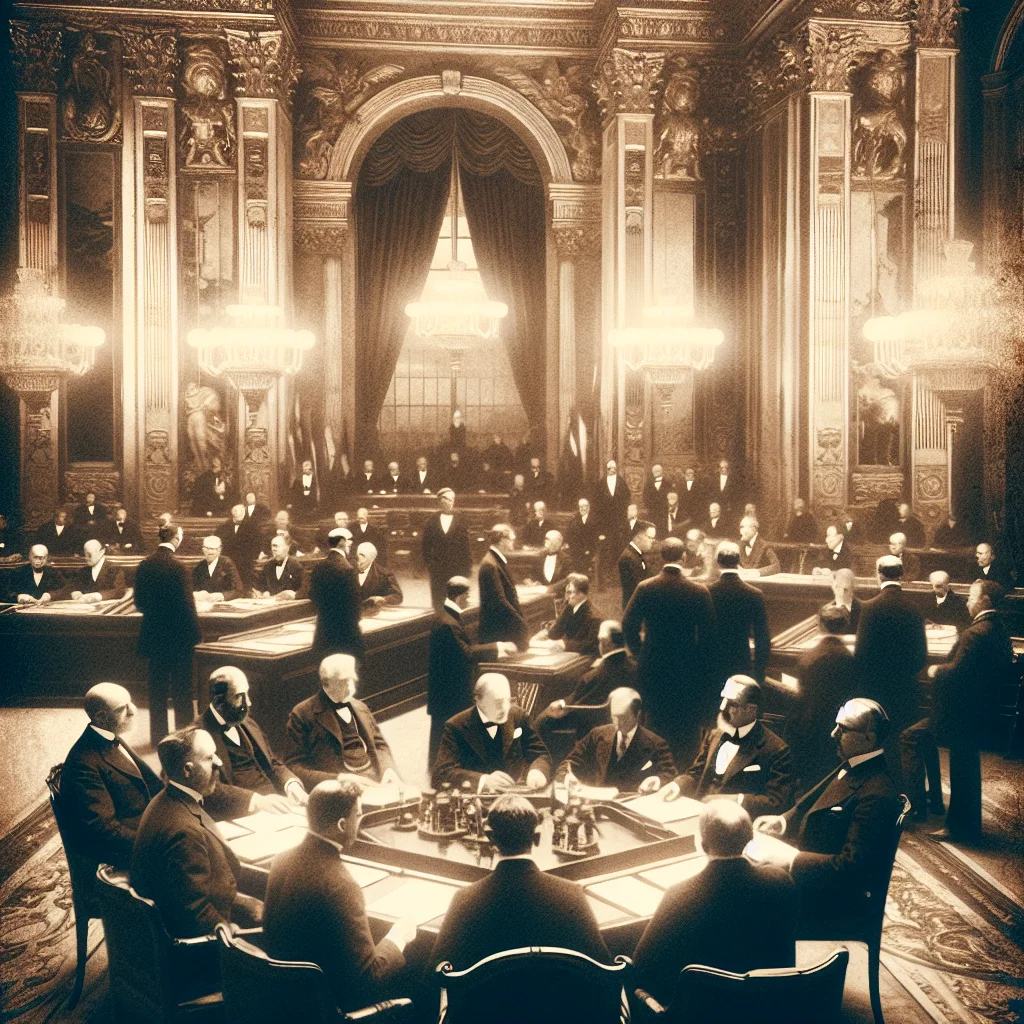
On January 16, 1920, the League of Nations officially came into being. The inaugural meeting took place in Geneva, Switzerland, with representatives from 42 countries in attendance. The League's primary objectives were to prevent wars through collective security, disarmament, and diplomacy, and to settle international disputes peacefully.
The League operated through a series of councils and assemblies, with the Council serving as the executive body. Key moments in its early history included efforts to mediate conflicts in the Balkans and the establishment of mandates over former colonies. Despite these initiatives, the League faced significant challenges, including the absence of the United States, which had rejected membership, and the rise of militarism in the 1930s.
Immediate Consequences
The establishment of the League of Nations was met with both optimism and skepticism. While many saw it as a symbol of a new era of diplomacy, others doubted its ability to enforce its decisions. The League's initial years saw some successes, such as resolving disputes between Finland and Sweden over the Åland Islands and between Greece and Bulgaria.
However, the League struggled with enforcement mechanisms, relying on member states to uphold decisions voluntarily. The absence of major powers like the United States weakened its influence, and the economic turmoil of the 1920s and 1930s further strained international cooperation.
Long-Term Impact
Despite its challenges, the League of Nations laid the foundation for modern international diplomacy. Its structure and principles influenced the creation of the United Nations in 1945, which addressed many of the League's shortcomings by including a broader range of powers and establishing more effective mechanisms for conflict resolution.
The League's legacy is evident in the emphasis on collective security and international law that characterizes today's global governance. Its efforts to promote disarmament and human rights continue to resonate in contemporary diplomatic discussions.
Legacy and Modern Relevance
Today, the League of Nations is often remembered for its failures, particularly its inability to prevent the outbreak of World War II. However, its establishment marked a significant shift in the way nations approached international relations, prioritizing diplomacy over unilateral action.
The lessons learned from the League's shortcomings have informed the evolution of international organizations, emphasizing the importance of inclusive membership and effective enforcement mechanisms. As the world grapples with complex challenges such as climate change and geopolitical tensions, the principles of cooperation and collective action remain as relevant as ever.
Conclusion
The establishment of the League of Nations on January 16, 1920, represented a bold attempt to reshape global diplomacy. While it faced numerous obstacles, its influence on international relations is undeniable. The League's legacy endures in the structures and principles of the United Nations and continues to inspire efforts to build a more peaceful and cooperative world. As we reflect on its history, we are reminded of the enduring importance of collaboration in addressing the challenges of our time.
More from This Month in History
Prohibition Begins: The Volstead Act Takes Effect on January 16, 1920
Explore the impact of the Volstead Act and the start of Prohibition on January 16, 1920, and its lasting effects on American society.
The Birth of the Internet: ARPANET's First Public Demonstration on January 8, 1973
Discover the pivotal moment on January 8, 1973, when ARPANET was first publicly demonstrated, paving the way for the internet era.
The 2006 UN Resolution on Iran's Nuclear Program: A Turning Point in Global Diplomacy
Explore the 2006 UN Resolution on Iran's nuclear program and its ongoing impact on international diplomacy.
The Launch of the First Transatlantic Telephone Call: Bridging Continents
On January 12, 1927, the first transatlantic telephone call was made, revolutionizing global communication.
Want to explore more historical events? Visit our Explore page to discover what happened on any date in history, or check out today's Event of the Day.