The First Successful Use of the X-ray Machine: Revolutionizing Medicine and Beyond
Introduction
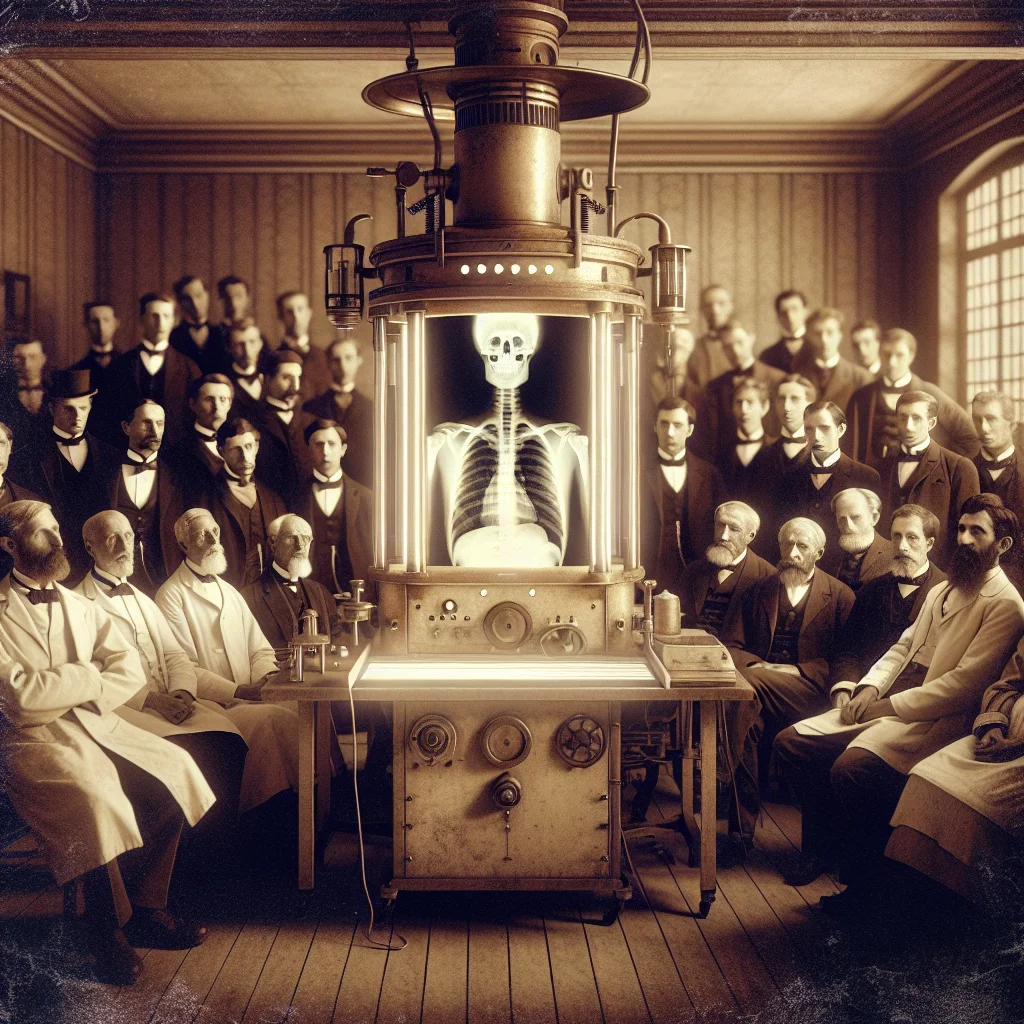
On January 18, 1896, the world witnessed a groundbreaking moment in medical history: the first successful use of the X-ray machine on a patient. This technological marvel didn't just transform medical diagnostics; it also paved the way for numerous advances in technology and science. Even today, the legacy of this invention is evident in every hospital and clinic across the globe, highlighting its enduring significance.
Historical Background
The story of the X-ray begins with Wilhelm Conrad Roentgen, a German physicist who discovered X-rays in late 1895. This discovery came at a time when the world was on the brink of the 20th century, a period marked by rapid industrialization and scientific exploration. The late 19th century was a fertile ground for technological innovations, and Roentgen’s work was a testament to the era’s spirit of discovery. His experiments with cathode rays led to an unexpected observation: a new type of radiation capable of penetrating solid objects and creating images of their internal structures.
The Event Itself
On January 18, 1896, Dr. Edwin Frost, a professor of physics at Dartmouth College, used an X-ray machine to image the fractured wrist of a young boy. This marked the first time an X-ray machine was successfully used for medical purposes, setting a precedent for its potential applications in medicine. The process involved placing the boy’s wrist in front of a photographic plate and directing the mysterious rays at it. The resulting image provided a clear view of the bone structure, a feat that was previously impossible without invasive surgery.
Immediate Consequences
The immediate reaction to the successful use of X-rays was one of astonishment and excitement. Medical professionals quickly recognized the potential of this new technology to revolutionize diagnostics. Within weeks, X-ray machines were being used in hospitals across Europe and North America, providing doctors with an unprecedented view inside the human body. This innovation not only improved diagnostic accuracy but also significantly reduced the need for exploratory surgery, leading to better patient outcomes.
Long-Term Impact
The impact of the X-ray machine extended far beyond the initial excitement of its medical applications. It laid the groundwork for the development of modern imaging technologies such as CT scans and MRIs, which continue to play a crucial role in diagnostics today. Furthermore, the principles of X-ray technology have influenced numerous fields, from security and materials science to art restoration, demonstrating its versatility and enduring utility.
Legacy and Modern Relevance
Today, the X-ray machine stands as a symbol of the power of scientific discovery and its capacity to improve human life. Its legacy is visible in countless medical innovations that followed, each building on the foundational work of Roentgen and his contemporaries. As we continue to explore new frontiers in medical technology, from AI diagnostics to personalized medicine, the story of the X-ray serves as a reminder of the transformative potential of innovation. Moreover, in an era where healthcare remains a critical global issue, the X-ray’s role in advancing medical science underscores the importance of continued investment in research and development.
Conclusion
The first successful use of the X-ray machine on January 18, 1896, was more than just a medical milestone; it was a catalyst for change across multiple disciplines. By opening a window into the human body, the X-ray revolutionized medical diagnostics and set the stage for a century of technological advances. As we reflect on its impact, we are reminded of the profound ways in which a single discovery can reshape our understanding of the world and improve the quality of life for millions. Today, as ever, the legacy of the X-ray inspires us to look beyond the visible and continue pushing the boundaries of what is possible.
More from This Month in History
How Apple's iPhone Revolutionized Technology on January 9, 2007
Discover how Apple's iPhone, unveiled on January 9, 2007, transformed technology and society, impacting how we communicate today.
The Birth of the Modern Olympic Movement: The First Winter Olympic Games
Explore the origins and impact of the first Winter Olympic Games held on January 1, 1924, in Chamonix, France.
The Historic Miracle on Ice: How January 11, 1980, Set the Stage for a Legendary Olympic Victory
Discover the significance of January 11, 1980, a pivotal date in Olympic history leading to the legendary Miracle on Ice.
How the Debut of 'Top of the Pops' Revolutionized Music Television
Discover how 'Top of the Pops' changed music television on January 2, 1964, and its lasting impact on global pop culture.
Want to explore more historical events? Visit our Explore page to discover what happened on any date in history, or check out today's Event of the Day.