The Birth of the New York Stock Exchange: A Revolution in Global Finance
Introduction
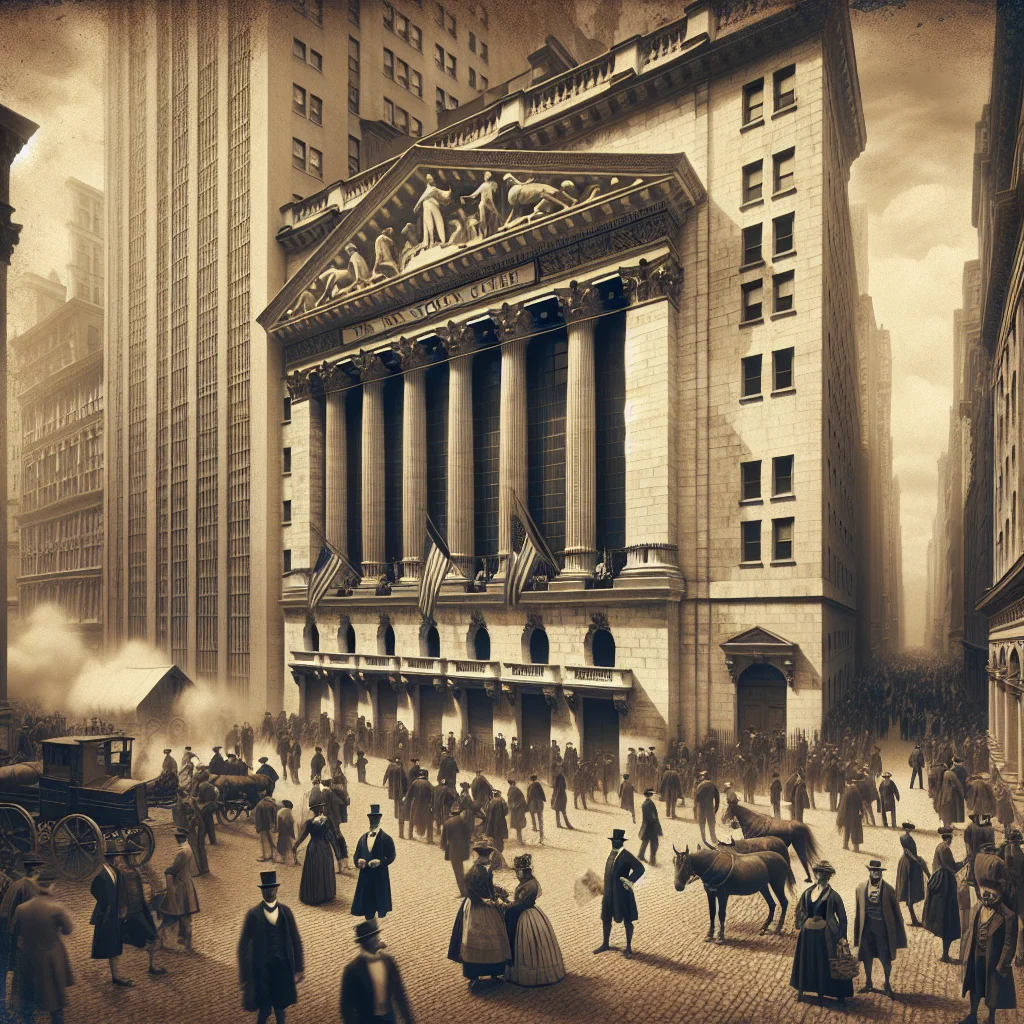
On January 8, 1817, a group of ambitious brokers gathered at 40 Wall Street in New York City to establish what would become the New York Stock Exchange (NYSE). This pivotal moment laid the foundation for the modern financial markets that drive today's global economy. Understanding the origins of the NYSE offers insights into the evolution of commerce and finance, highlighting its continued relevance in a world where financial markets have become a cornerstone of economic growth.
Historical Background
The early 19th century was a period of rapid economic change in the United States. Following the War of 1812, the country experienced a surge in industrial activity and urbanization. New York City, with its strategic port and growing population, emerged as a hub of commerce and trade. At this time, financial transactions were primarily conducted in informal settings, often under a buttonwood tree on Wall Street. The need for a structured marketplace became apparent as the volume and complexity of trades increased.
The era was marked by the rise of influential financiers and entrepreneurs who recognized the potential of a formalized exchange. Among them were key figures such as Anthony Stockholm, the first president of the NYSE, and Nathaniel Prime, a prominent banker. These individuals, along with other brokers, sought to create a system that could efficiently manage the burgeoning demands of the financial sector.
The Event Itself
On that significant day in January 1817, the brokers convened to draft and sign the constitution of the New York Stock & Exchange Board. This new establishment aimed to regulate transactions, establish consistent trading practices, and instill trust among investors. The founding members set forth rules governing membership, transactions, and the handling of disputes. This formalization marked the transition from casual, often chaotic trading to a more organized and professional approach.
The timeline of the NYSE's development included several key moments: the adoption of a constitution, the election of officers, and the establishment of a fixed location for trading. These changes provided the structure necessary to support a growing economy and increasingly sophisticated financial instruments.
Immediate Consequences
The immediate impact of the NYSE's founding was profound. It established New York City as the financial capital of the United States, attracting investors and businesses seeking a reliable and efficient marketplace. The creation of a regulated environment helped to mitigate the risks associated with speculation and fraud, fostering trust and encouraging investment.
Reactions at the time were mixed, with some viewing the formalized exchange as a critical step forward, while others remained skeptical of its effectiveness. However, the NYSE quickly proved its value, facilitating the growth of American industry and commerce.
Long-Term Impact
The effects of the NYSE's establishment are still visible today. It played a critical role in shaping the modern financial landscape, influencing the development of other stock exchanges worldwide. The NYSE set standards for transparency, governance, and market integrity, becoming a model for financial markets globally.
Historians consider the formation of the NYSE significant because it catalyzed the expansion of the American economy, enabling businesses to raise capital efficiently and spurring innovation. Its success contributed to the United States' emergence as a global economic powerhouse.
Legacy and Modern Relevance
Today, the NYSE remains a symbol of economic strength and resilience. Its legacy is evident in its pivotal role in facilitating global trade, investment, and economic growth. The lessons learned from its establishment—such as the importance of regulation, investor protection, and market efficiency—continue to inform contemporary financial practices.
The NYSE's relevance extends to present-day issues, including debates over financial regulation, market transparency, and the balance between free markets and oversight. These discussions echo the challenges faced by the NYSE's founders, underscoring the enduring nature of the questions they sought to address.
Conclusion
The founding of the New York Stock Exchange on January 8, 1817, represents a transformative moment in financial history. Its establishment not only shaped the trajectory of the American economy but also set the stage for the interconnected, global financial system we know today. By reflecting on the NYSE's origins, we can appreciate the complexities of modern finance and the ongoing importance of innovation, regulation, and trust in sustaining economic progress.
More from This Month in History
The Birth of the Harlem Globetrotters: January 5, 1927
Discover the origins of the Harlem Globetrotters, their impact on basketball, and their enduring legacy since January 5, 1927.
The Signing of the Paris Peace Accords: Ending the Vietnam War
Explore the significance of the Paris Peace Accords signed on January 13, 1973, and its lasting impact on global politics.
The Dawn of the Digital Age: The First Public Demonstration of the UNIVAC Computer on January 10, 1952
Explore the first public demonstration of the UNIVAC computer on January 10, 1952, and its enduring impact on technology.
The Formation of the American Telephone and Telegraph Company: A Revolution in Communication and Commerce
Explore the formation of AT&T on January 5, 1885, a pivotal moment that revolutionized global communication and commerce.
Want to explore more historical events? Visit our Explore page to discover what happened on any date in history, or check out today's Event of the Day.